HVE
High Environmental Value (HVE) certification is built on several core pillars: traceability and transparency, biodiversity protection, and responsible management of natural resources.
In 2024, 60% of Bordeaux’s vineyard area is certified HVE.
HVE certification
The HVE (Haute Valeur Environnementale) certification was introduced by the French Ministry of Agriculture following the Grenelle de l’Environnement. It recognises farms that have committed to particularly high standards of environmental responsibility.
Its purpose is to highlight and reward best practices in sustainable agriculture, based on performance indicators applied across the entire estate. In viticulture, HVE certification for Bordeaux wines primarily focuses on the following environmental outcomes:
- Biodiversity protection;
- Responsible plant‑protection strategies;
- Fertiliser management.
The Bordeaux Wine Environmental Management System (SME) provides collective support to help estates work towards HVE certification.
Curious to learn more about HVE wines or the certification itself? Visit the official HVE website.
Focus on the BordeauX wine SME :
Launched in 2010, the Bordeaux Wine Environmental Management System (SME) is a collective, territory‑wide initiative dedicated to environmental progress. Built on voluntary participation, cooperation and shared experience, its mission is to support the ecological transition and accelerate the evolution of vineyard practices across Bordeaux.
Today, 400 companies are part of the SME association, including 341 certified HVE and/or ISO 14001.
Supporting company‑wide commitment
The SME supports all players in the Bordeaux wine sector — winegrowers, cooperatives and merchants — who wish to engage in a collective environmental improvement process. To help them train, define their environmental strategy and implement action plans, participants benefit from the guidance of CIVB‑accredited advisors.
Their goal? To achieve HVE certification and/or collective ISO 14001 certification, within a framework built on shared values.
Dialogue for a dynamic territoty
The SME brings together companies motivated to progress collectively in reducing the environmental impact of the wine sector. By breaking isolation, comparing experiences in a supportive environment and sharing best practices, participants foster innovation and encourage the pooling of resources.
biodiversity rooted in living soils
A unique region, a mosaic of terroirs and a distinctive climate: these are the foundations of Bordeaux wines. The richer the fauna and flora within our vineyards, the clearer the sign of a healthy, balanced ecosystem. Protecting soil life is therefore a daily priority.
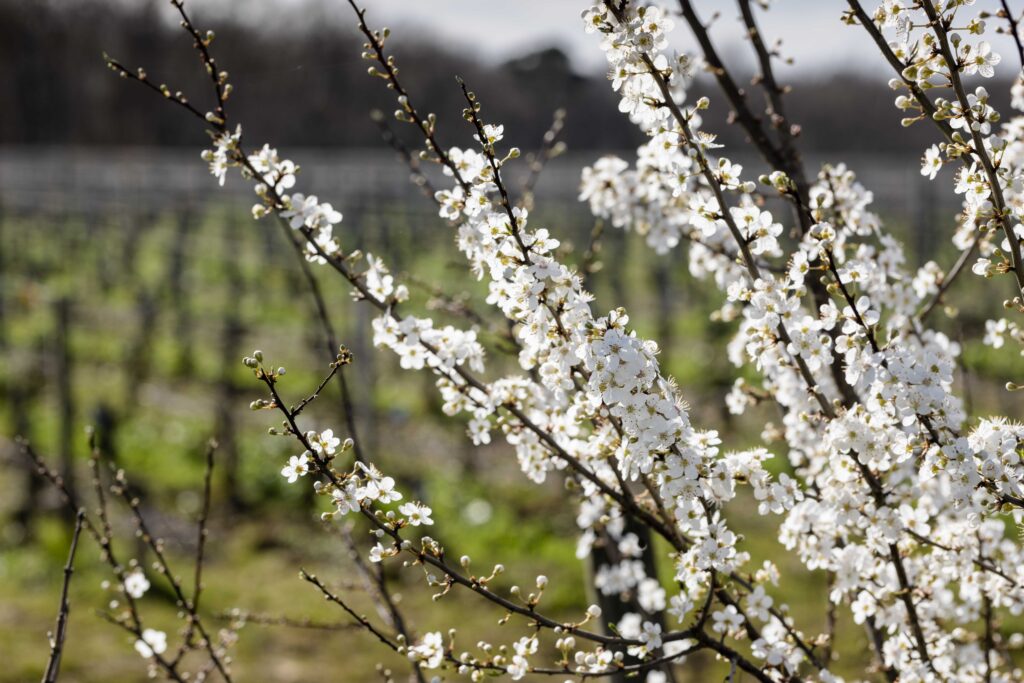
SME member companies commit to enhancing soil fertility through concrete actions: planting hedgerows and local species along vineyard plots, sowing flowers on fallow land, using green manures, managing ditches responsibly, and maintaining grass cover.
Our actions in figures:
- 85% of vineyard plots under grass cover in 2019;
- 223 km of hedgerows recorded across the collective in 2023;
- 60% of vineyard surfaces receiving no herbicides in 2023;
- 288 beehives installed in vineyards in 2023;
- 15 hectares of melliferous fallow land supporting pollinating insects.
A reduced environmental footprint
To limit their ecological impact, SME companies are constantly stepping up their efforts: controlling energy consumption, valorising waste, improving effluent management, protecting waterways and optimising the use of plant‑protection products.
By identifying sources of impact, these businesses adapt and improve over time. Thanks to shared monitoring indicators, they can also benchmark their results against those of the wider collective.
Our actions in figures:
- 20% reduction in average water consumption per estate;
- 14% in Treatment Frequency Indicators (excluding herbicides) in 2023 vs 2018;
- 19% in herbicide Treatment Frequency Indicators in 2023 vs 2018;
- 34% of vineyard area under sexual confusion (an alternative pest‑control method to insecticides).